The Kano Emirate was a Muslim state in Northern
Nigeria formed in 1805 during
the Fulani jihad when the Muslim Hausa-led Sultanate of Kano was deposed and replaced by a new emirate
which became a vassal state of the Sokoto
Caliphate. During and after the British colonial period, the powers of the emirate
were steadily reduced.[1]
History[edit]
Hausa kingdom and Sultanate[edit]
Main article: Kingdom of Kano
Main article: Sultanate of Kano
The Hausa Kingdom of Kano was based on an ancient settlement of Dala Hill. While
small chiefdoms were previously present in the area, according to the Kano
Chronicle, Bagauda, a grandson of the mythical hero Bayajidda,[2] became the first king of Kano in 999, reigning
until 1063.[3][4] Muhammad Rumfa ascended to the throne in 1463 and reigned
until 1499. During his reign he reformed the city, expanded the Sahelian Gidan
Rumfa (Emir’s Palace), and
played a role in the further Islamization of the city as he urged prominent
residents to convert.[5][6] The Hausa state remained independent until the
Fulani conquest of 1805.
Fulani conquest and rule[edit]
At the beginning of the 19th century, Fulani Islamic leader Usman
dan Fodio led a jihad affecting much of northern Nigeria, leading to
the emergence of the Sokoto Caliphate.
Kano became the largest and most prosperous province of the empire.[7] It was one of the last major slave societies. Heinrich Barth, a
classical scholar who spent several years in northern Nigeria in the 1850s,
estimated the percentage of slaves in Kano to be at least 50%, most of whom
lived in slave villages.[7]
From 1893 until 1895, two rival claimants for the throne fought
a civil war. With the help of royal slaves, Yusufu was victorious over Tukur
and claimed the title of emir.[8]
Fall[edit]
The British pacification campaign termed Kano-Sokoto Expedition set off from Zaria at the end of January 1903 under the command of Colonel Morland. British officers and N.C.O.s and 800 African rank and file. Apart from a company of mounted infantry and a few gunners, the whole force consisted of infantry. They were supported, however, by four 75-mm. mountain guns, which could if necessary be dismantled and transported by porters, and by six machine guns.
The Kano Emirate was a Muslim state in Northern
Nigeria formed in 1805 during
the Fulani jihad when the Muslim Hausa-led Sultanate of Kano was deposed and replaced by a new emirate
which became a vassal state of the Sokoto
Caliphate. During and after the British colonial period, the powers of the emirate
were steadily reduced.[1]
History[edit]
Hausa kingdom and Sultanate[edit]
Main article: Kingdom of Kano
Main article: Sultanate of Kano
The Hausa Kingdom of Kano was based on an ancient settlement of Dala Hill. While
small chiefdoms were previously present in the area, according to the Kano
Chronicle, Bagauda, a grandson of the mythical hero Bayajidda,[2] became the first king of Kano in 999, reigning
until 1063.[3][4] Muhammad Rumfa ascended to the throne in 1463 and reigned
until 1499. During his reign he reformed the city, expanded the Sahelian Gidan
Rumfa (Emir’s Palace), and
played a role in the further Islamization of the city as he urged prominent
residents to convert.[5][6] The Hausa state remained independent until the
Fulani conquest of 1805.
Fulani conquest and rule[edit]
At the beginning of the 19th century, Fulani Islamic leader Usman
dan Fodio led a jihad affecting much of northern Nigeria, leading to
the emergence of the Sokoto Caliphate.
Kano became the largest and most prosperous province of the empire.[7] It was one of the last major slave societies. Heinrich Barth, a
classical scholar who spent several years in northern Nigeria in the 1850s,
estimated the percentage of slaves in Kano to be at least 50%, most of whom
lived in slave villages.[7]
From 1893 until 1895, two rival claimants for the throne fought
a civil war. With the help of royal slaves, Yusufu was victorious over Tukur
and claimed the title of emir.[8]
Fall[edit]
The British pacification campaign termed Kano-Sokoto Expedition
set off from Zaria at the end of January 1903 under the command of Colonel
Morland. British officers and N.C.O.s and 800 African rank and file. Apart from
a company of mounted infantry and a few gunners, the whole force consisted of
infantry. They were supported, however, by four 75-mm. mountain guns, which
could if necessary be dismantled and transported by porters, and by six machine
guns.
1850 steel
engraving of Kano
After sporadic fighting outside the walls of the fort, the
British managed to penetrate the defensive parameters of the capital. Kano was
mostly left defenseless at the time, the Emir, Aliyu
Babba was away with its
large contingent Cavalry for the Autumn Campaign at Sokoto.
News of the British
capture of Kano in February 1903 sent
the Cavarlry in a long march to retake the city.
After successfully defeating the British in three encounters, on
the 27 of February 1903, the Grand Vizier of Kano; Ahmadu Mai Shahada and much
of the Kano Cavalry was ambushed at Katarkwashi. The death of the Vizier and subsequent
capture and exile to Lokoja of the 7th emir of Kano; Aliyu Babba spelled the formative end of the Kano Emirate.[1] The British made Kano an important
administrative centre and kept most of the Emirates institutions in the form of
the Kano
Emirate Council subject to the British
crown in a newly formed state called Northern
Nigeria.
The British pacification campaign termed Kano-Sokoto Expedition set off from Zaria at the end of January 1903 under the command of Colonel Morland. British officers and N.C.O.s and 800 African rank and file. Apart from a company of mounted infantry and a few gunners, the whole force consisted of infantry. They were supported, however, by four 75-mm. mountain guns, which could if necessary be dismantled and transported by porters, and by six machine guns.
1850 steel
engraving of Kano
After sporadic fighting outside the walls of the fort, the
British managed to penetrate the defensive parameters of the capital. Kano was
mostly left defenseless at the time, the Emir, Aliyu
Babba was away with its
large contingent Cavalry for the Autumn Campaign at Sokoto.
News of the British
capture of Kano in February 1903 sent
the Cavarlry in a long march to retake the city.
After successfully defeating the British in three encounters, on the 27 of February 1903, the Grand Vizier of Kano; Ahmadu Mai Shahada and much of the Kano Cavalry was ambushed at Katarkwashi. The death of the Vizier and subsequent capture and exile to Lokoja of the 7th emir of Kano; Aliyu Babba spelled the formative end of the Kano Emirate.[1] The British made Kano an important administrative centre and kept most of the Emirates institutions in the form of the Kano Emirate Council subject to the British crown in a newly formed state called Northern Nigeria.
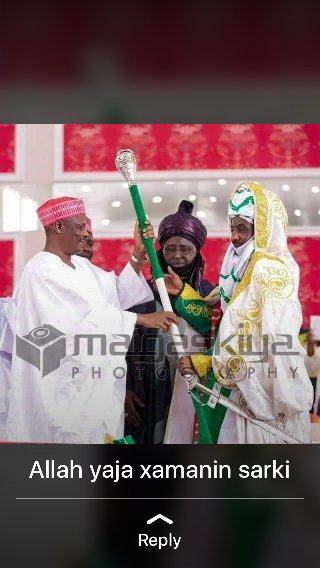
CURRENT EMIR OF KANO; Emir Muhammad Sanusi II:
Former Governor of the (CBN), malam muhammad sanusi II, was named the new emir of kano, He suceeds his late uncle, Emir Ado Bayero as the 57th emir of kano, following his death on Friday 6th June 2014 .Announcing the new Emir on 8th June 2014, the kano state governor (as at that time) Rabiu musa kwankwaso said that based on advice given to him by the four kingmakers, His government accepted the choice of Muhammad sanusi II as the new Emir of kano .
His Lineage To The Emirate;
His grandfather, sarki sanusi was the Emir of kano from 1953-1963. He was also the eldest son of his father, sarki abdullahi Bayero, who was the Emir of kano from 1926-1953. sarki sanusi (the emir`s grandfather) hosted Queen Elizabeth II when she visited kano in 1956.



 Aminu Sadiq Muhammad
